
Establishing Clear Accountability: How to Assign Ownership in Proposal Workflows
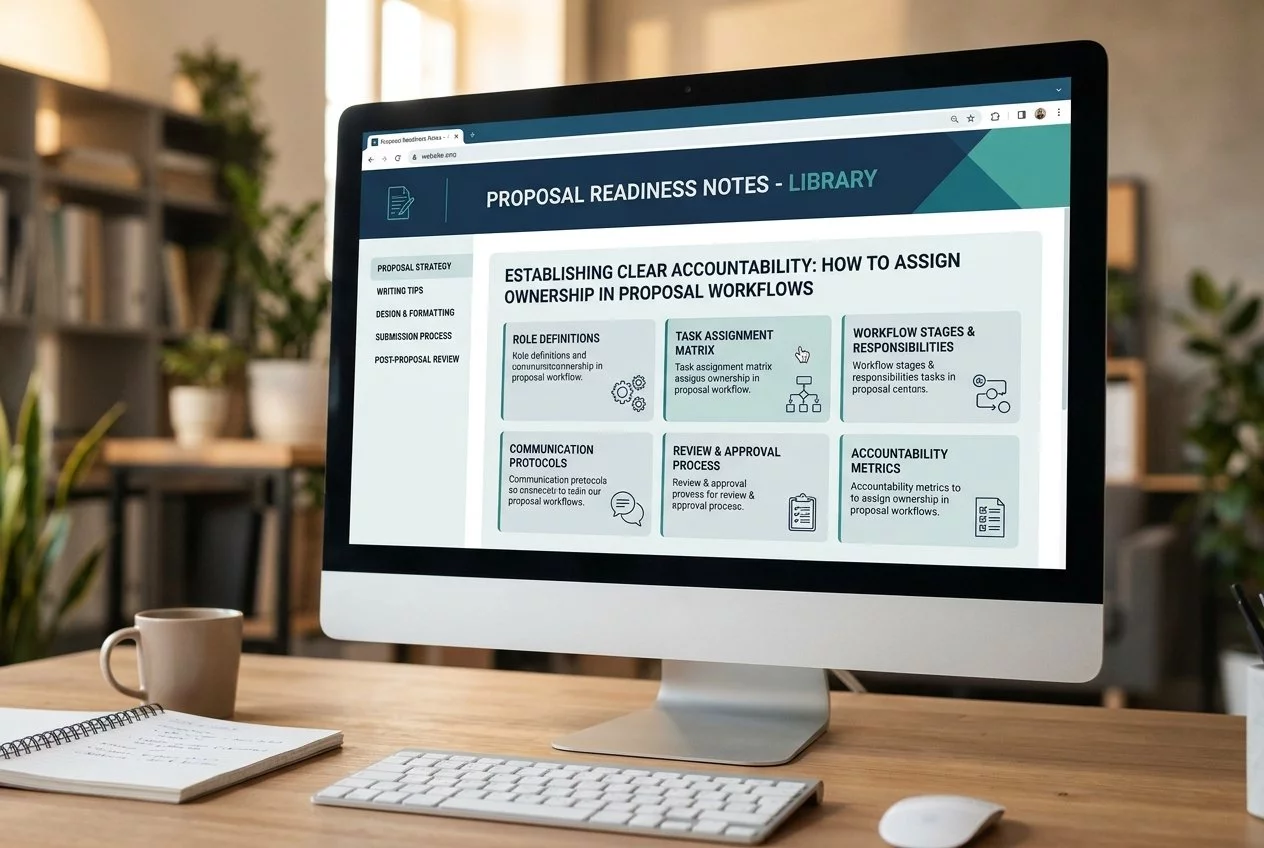
Many organizations struggle with a common yet debilitating issue in their proposal development processes: a pervasive lack of clarity regarding who is responsible for what. This often leads to missed deadlines, duplicated efforts, and a general sense of disarray. Teams find themselves navigating a complex web of tasks without a clear map of ownership, creating significant operational hurdles.
The absence of defined roles and responsibilities can quickly transform a well-intentioned project into a chaotic endeavor. Key sections of a proposal might remain unaddressed until the last minute, simply because multiple team members assumed someone else was handling it. This ambiguity erodes efficiency and can significantly impact the quality of the final submission, jeopardizing potential opportunities.
Moreover, without explicit ownership, it becomes incredibly difficult to track progress or identify bottlenecks effectively. When a specific task falls behind schedule, pinpointing the individual accountable for its delay is often a fruitless exercise. This lack of traceability hinders performance evaluation and prevents timely interventions, delaying the entire workflow and increasing stress.
The ripple effect extends beyond mere delays. Team morale can suffer as individuals feel overburdened by tasks they didn't explicitly agree to, or conversely, feel their contributions are not recognized due to shared, undefined responsibilities. This environment fosters frustration and can lead to a decline in overall team cohesion and productivity, impacting team well-being.
Ultimately, the core challenge lies in moving from a collective "we" to a specific "I" for each critical element of a proposal. Establishing this individual ownership is paramount for streamlined operations, enhanced collaboration, and consistently delivering high-quality proposals that meet strategic objectives and uphold organizational standards.
Underlying Factors Contributing to Unclear Ownership
- Lack of a standardized process for assigning tasks, often relying on informal agreements or verbal requests rather than documented allocations, leading to confusion.
- Inadequate tools or systems that fail to provide a centralized platform for task management and ownership tracking across complex projects, hindering visibility.
- Organizational culture that hesitates to empower individuals with full responsibility, leading to diffused accountability and decision-making by committee, slowing progress.
Pathways to Clear Accountability
To overcome the challenges of ambiguous ownership, several strategic solutions can be implemented to foster a more structured and accountable environment.
Solution 1: Implement a RACI Matrix for Proposal Tasks
A fundamental step is to adopt a RACI (Responsible, Accountable, Consulted, Informed) matrix. This framework explicitly defines who does the work, who is ultimately answerable, who provides input, and who needs to be kept updated. It eliminates ambiguity by assigning clear roles to every task within the proposal workflow, ensuring no task is overlooked.
Solution 2: Leverage Dedicated Workflow Management Software
Investing in specialized workflow management software can revolutionize task assignment and tracking. These platforms allow for creating standardized templates with pre-assigned roles for different proposal sections. When a new project begins, ownership is automatically designated or easily assigned by project leads, centralizing accountability.
Such tools provide real-time visibility into task status and owner, ensuring transparency across the team. Automated notifications remind owners of deadlines and prompt collaborators for contributions, significantly reducing missed steps and bottlenecks. For PandaLane Briefs, this means streamlined operations and improved project flow.
Solution 3: Foster a Culture of Personal Responsibility and Empowerment
Beyond tools and frameworks, cultivating a culture where personal responsibility is valued is paramount. Leadership must clearly communicate the importance of individual contributions and set expectations for accountability. This involves empowering team members to take full ownership of their assigned tasks and decisions, building trust.
Regular feedback, recognition for strong ownership, and constructive guidance when accountability falls short, are essential. This cultural shift ensures that clear ownership becomes an intrinsic part of PandaLane Briefs' operational ethos, leading to more consistent and higher-quality proposal outcomes for every project.
Potential Risks and Mitigation Strategies
- Resistance to Change: Team members might resist new systems or processes, preferring established (even if inefficient) methods. Recommendation: Involve key stakeholders early in the design phase and provide comprehensive training and clear communication on benefits.
- Over-assignment or Under-assignment: Incorrectly distributing responsibilities can lead to burnout for some and idle time for others. Recommendation: Conduct thorough workload assessments and regularly review task allocations to ensure equitable distribution and optimal resource use.
- Lack of Follow-through: Initial enthusiasm for new accountability frameworks may wane without consistent reinforcement and leadership support. Recommendation: Establish regular check-ins, performance reviews tied to ownership, and visible recognition for adherence to new protocols.
Comments
Emanuel Richardson
This article perfectly highlights the challenges we face daily. The RACI matrix idea is particularly insightful for our complex projects.
Hope Warren
Glad to hear it resonates! Implementing a RACI matrix can indeed bring much-needed clarity to intricate workflows. We believe in practical solutions.
Martha Young
While the solutions sound promising, I'm curious about the initial time investment required to set up these systems. How quickly can teams adapt?
Logan Barnes
That's a valid concern. Initial setup for any new system requires effort, but the long-term gains in efficiency often outweigh it. Phased implementation and thorough training can accelerate adaptation.
Eduardo Willis
I appreciate the emphasis on cultural change. Tools are great, but fostering a sense of ownership is what truly drives sustainable improvement.
Diane Shaw
Absolutely! Technology supports processes, but a strong culture of accountability is the bedrock for lasting success. We champion both aspects.
Leave a Comment